Kelingking, Diamond, Atuh, Crystal Bay, and the hidden coves on the east coast. A short guide to the eight beaches worth planning a trip around.
Nusa Penida has more than thirty named beaches. Most are accessible only by rough tracks and signed by tame ones — and three or four of them are so iconic that they end up on every Bali itinerary within a year of the island opening up. The short version: the headline beaches are the four below, supported by two striking cliff formations and a couple of quieter coves on the east coast for second-time visitors.
Below is the full list, grouped by character, with a practical note for each.
Popular and iconic
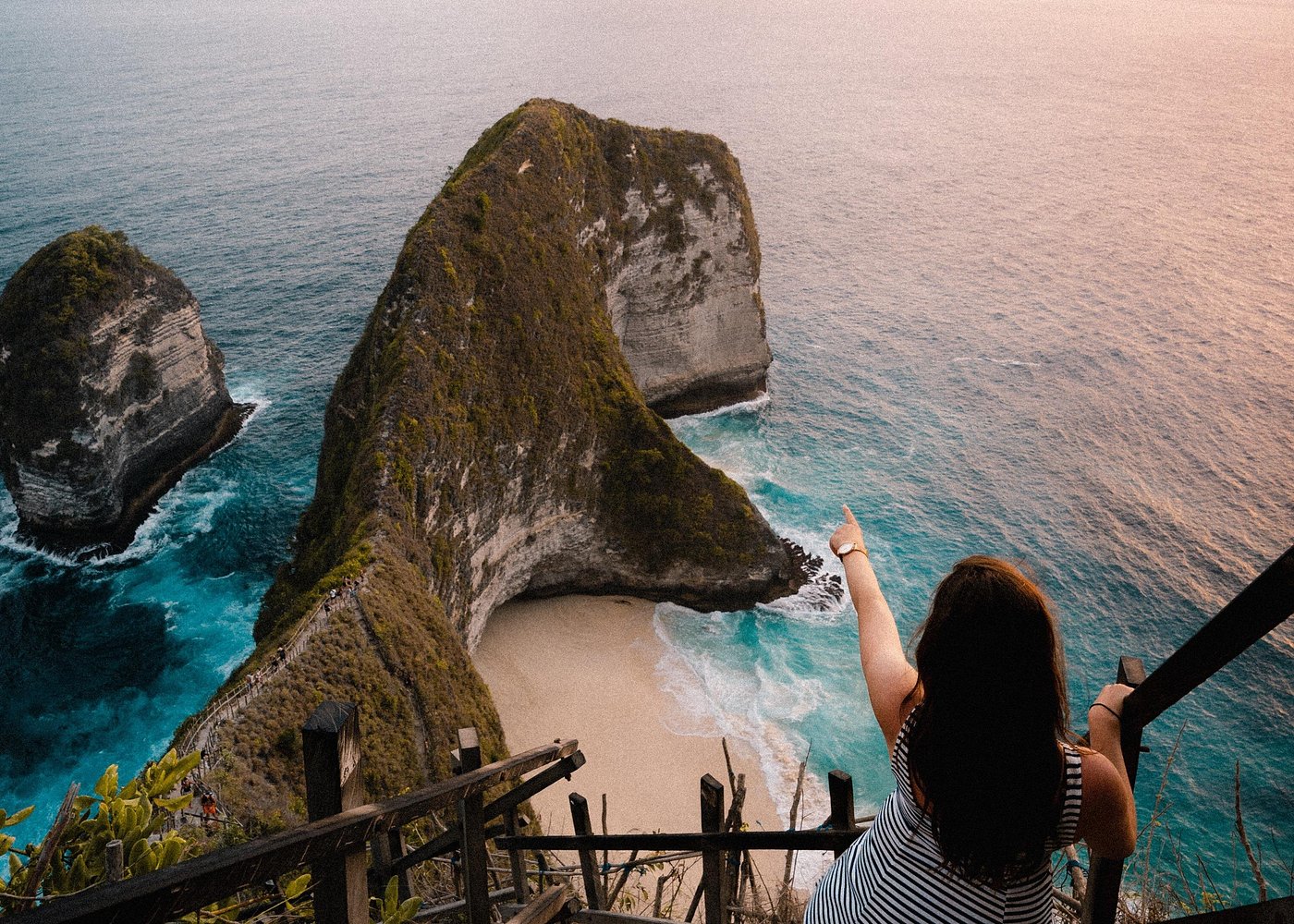
Kelingking Beach. The headline of the island. A limestone headland shaped like a T-Rex, with a sliver of white sand visible from the clifftop platform. The view is free and spectacular; the descent to the beach is steep (chains and ladders bolted into the cliff) and slow — most fit hikers take 30–45 minutes down and 60–90 minutes back up, with multiple deaths since 2024 reminding everyone that wet rock and questionable weather make this a strict no-go. Most visitors stay on the clifftop; that is enough to experience the place. Best at sunrise (8:00–8:30 AM) for clean light and few crowds; dry season April to October.
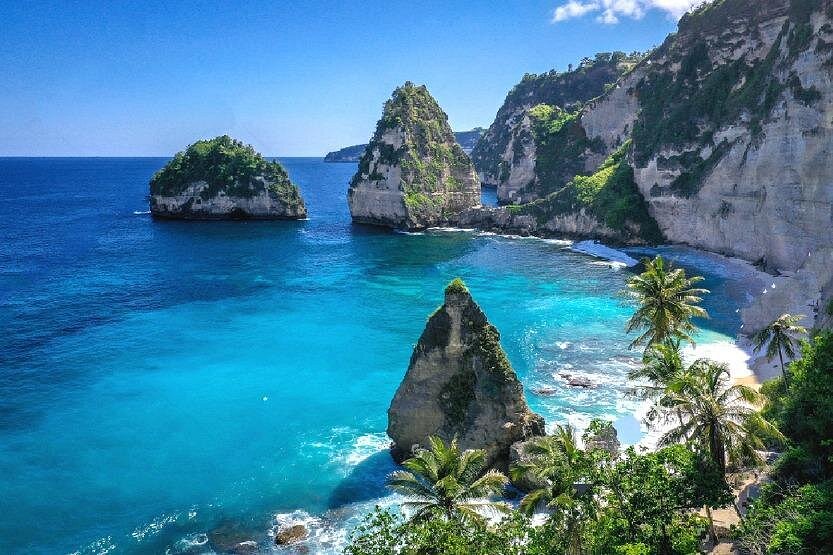
Diamond Beach. A pristine white-sand cove at the bottom of roughly 800 carved steps on the south-east coast. From the top you can see the whole bay between two pale limestone headlands; on the sand the cliffs tower 200 metres above you and the water sits on a gradient from pale aquamarine to deep blue. Best at sunrise or in the late afternoon, before the day-trippers land. The dry season makes the staircase safer and the water calmer. There is a small entry fee (around IDR 10,000 per person as of 2026).
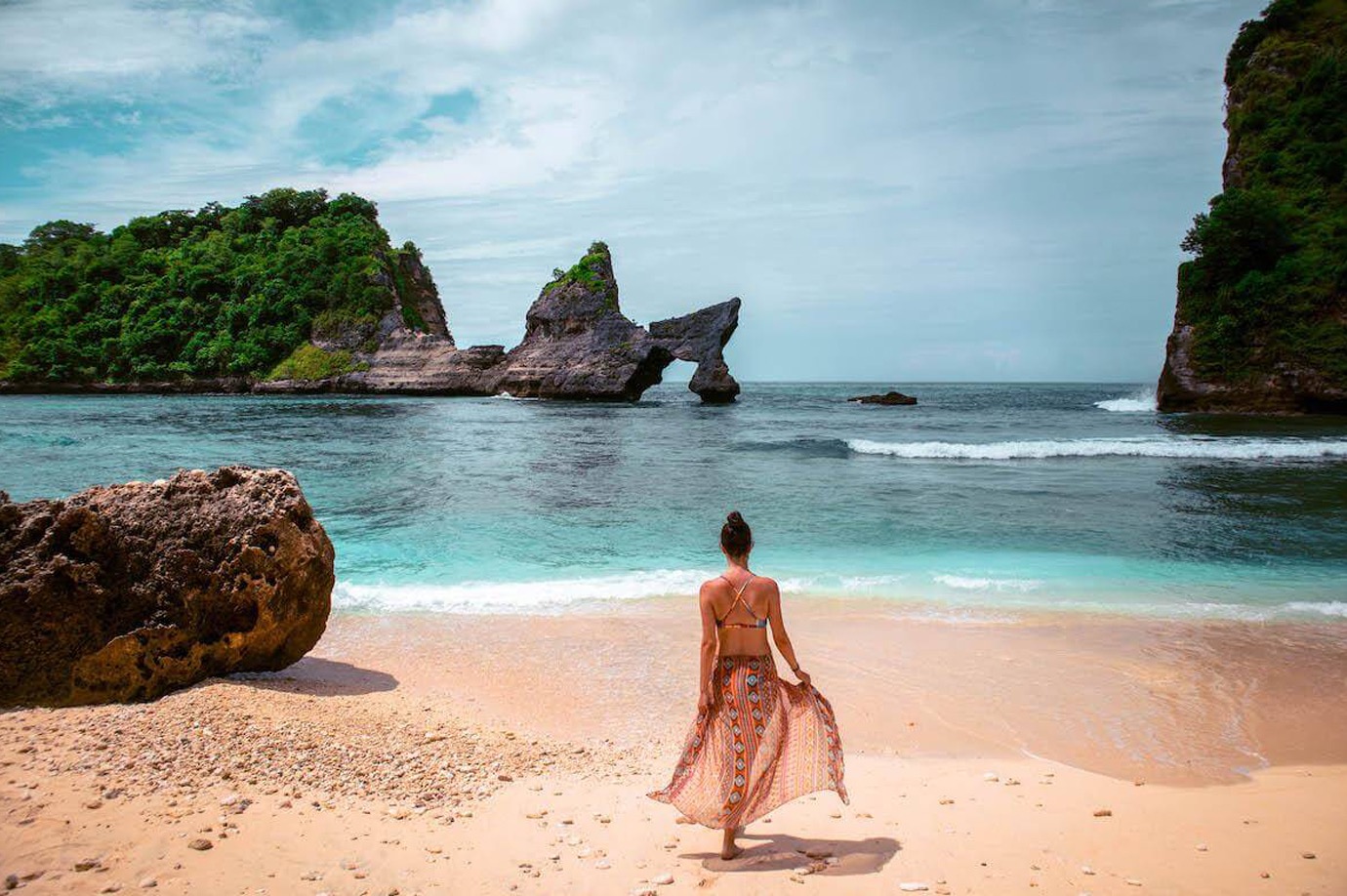
Atuh Beach. A smaller, more sheltered cove a short drive east of Diamond, with a wooden floating platform near the shoreline that photographers love. Less crowded than Diamond and a calmer spot for swimming when the swell is up. The cliff walls are shorter here — about 30 metres — and a row of coral rocks just offshore gives the beach its signature silhouette.
Crystal Bay. The clearest water on the west coast and the easiest snorkel on the island. A wide, horseshoe-shaped bay with a gently sloping white-sand bottom, fringing reef on both sides, and dense marine life — angelfish, butterflyfish, parrotfish, occasional turtles. Visibility regularly clears 20 metres. Best in the dry season and at first thing in the morning, before the surface chop builds.
Cliff formations and natural pools
Two stops on the same cliff head as Crystal Bay, both worth a dedicated photo stop.
Broken Beach (Pasih Uug). A natural limestone arch framing a circular cove — the collapsed roof of an ancient sea cave, with the Indian Ocean still rolling in through the broken side. There is no beach access (the cliffs are sheer), so this is a viewpoint stop. From the clifftop platform you can see the layered bedding planes of the original cave roof in the opposite wall. Best at early morning or golden hour; avoid midday when the tours arrive.
Angel's Billabong. Two minutes' walk along the cliff from Broken Beach. A natural infinity pool carved into the volcanic rock, sometimes called the 'natural pool'. The visit is entirely tide-dependent — calm and swimmable at low tide, covered by surging white water at high tide (and dangerous even outside high tide if a freak wave hits the slot). Aim for the low-tide window of the day, in the dry season; ask your driver or the on-site warung for the tide time. Combined with Broken Beach, this is a 90-minute visit.
Hidden and quiet
Two coves on the east coast that most day-trippers pass straight over.
Suwehan Beach. A tucked-away white-sand cove ringed by dramatic high cliffs, almost completely off the day-trip circuit. The drive in is unpaved and rough; bring a local driver, not a rented scooter. The reward is one of the quietest beaches on the island, with a small cliff overhang on one end that locals use as a swing. Best for visitors staying at least two nights who want a beach that genuinely feels empty.
Tembeling. Not strictly a beach — a forested area with natural freshwater springs that run straight to the coast — but listed together because the access road also reaches a small cove with a thin crescent of sand. The freshwater pools higher up the path are the main reason to come. Visitors usually pair Tembeling with a Pelingguh-area drive, or as a quiet detour on the way back from Diamond Beach.
How to plan a beach trip
Most day-trippers can comfortably cover the four headline beaches (Kelingking, Diamond, Crystal Bay, with a quick stop at Broken Beach / Billabong) in two long days on the island — one day on the west, one on the east — with a third day for snorkelling or for Suwehan if you have time. West coast beaches are reachable in 15–30 minutes from Semabu Hills; east coast is a longer drive (1.5 to 2 hours), which is why most guests pair them with a sunrise start. We run half-day loops and full-day loops to both coasts, with a private driver and the option to switch stops based on tide and weather on the day. Message us on WhatsApp and we'll plan around your dates and how energetic you're feeling.
See also
Each bay has its own guide — start with Kelingking, Crystal Bay, Angel's Billabong, and Broken Beach on the west side. East coast: Diamond Beach and Rumah Pohon. For season selection, see when to come.