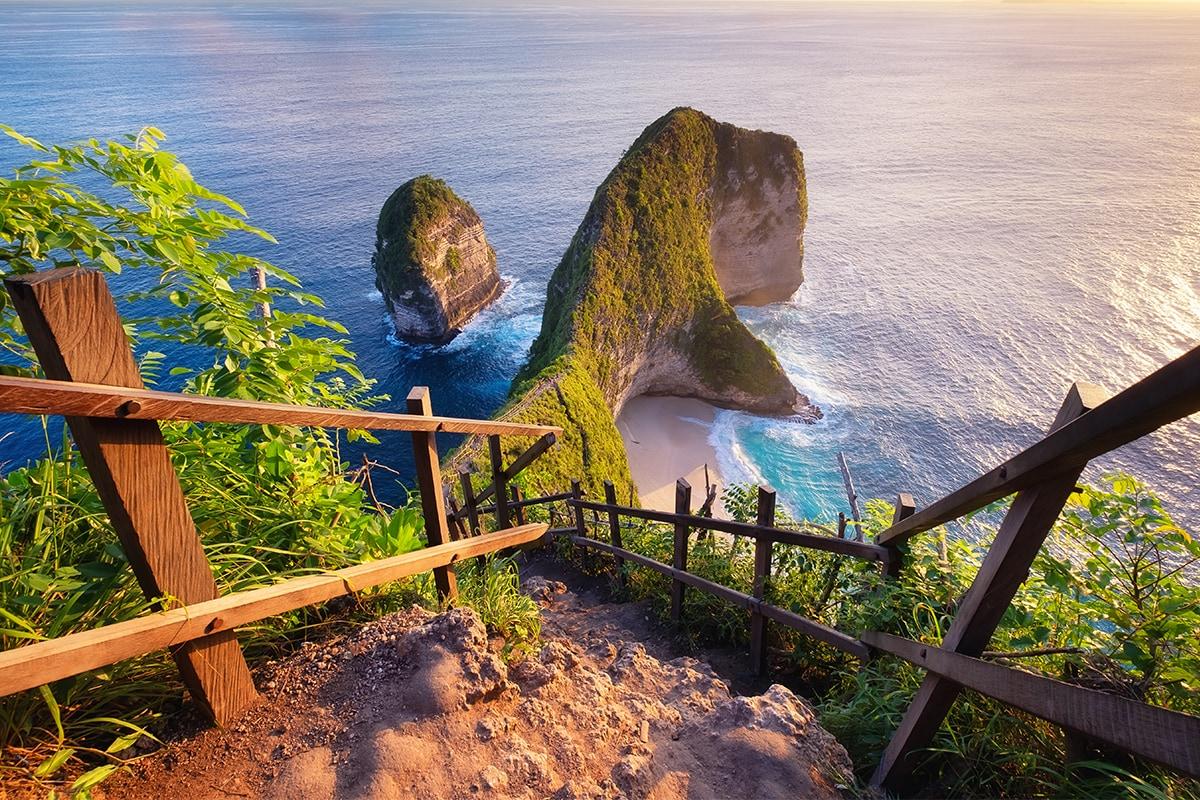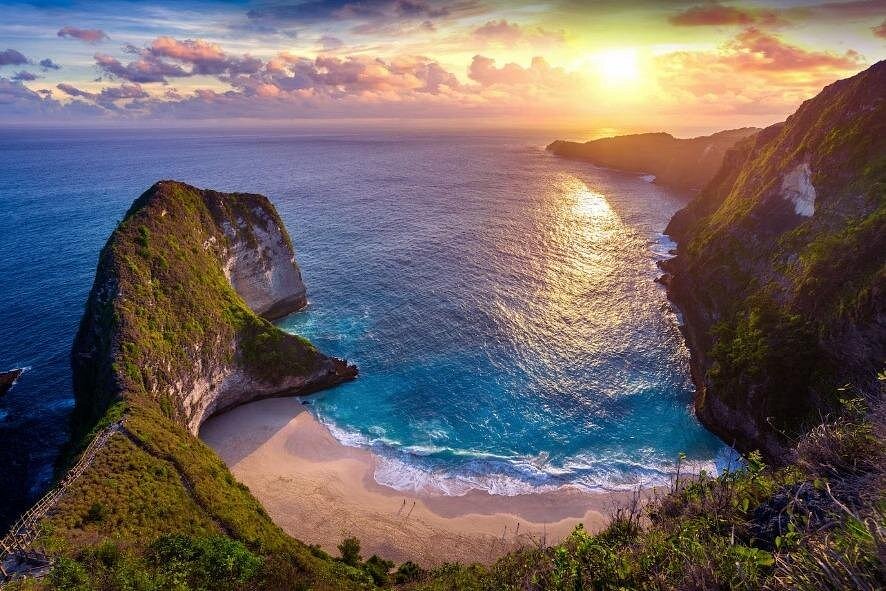

When the weather is the kindest, when the crowds ease off, and when the manta rays are most reliable — a practical guide to picking the right month for your trip.
Nusa Penida does not have a single 'best month' the way some tropical islands do. It has trade-offs — between weather, crowd, water clarity, and the specific thing you came for (manta rays, cliffs, empty beaches, dry walks). The shortest version: April, May, September, and October are the best four months, and the rest of the year has its own reasons to come. Below is a month-by-month guide plus practical notes on what to expect in each window.
The two seasons in plain
Nusa Penida has two main seasons per year: a dry season from April to October and a wet season from November to March. That much is the same as Bali proper, but the wind pattern at sea is what makes the difference for the things you'll actually be doing here.
The dry season is warm (24–29°C during the day), mostly sunny, and the strait between Bali and Nusa Penida is calmer. Visibility underwater is consistently 20 metres or more. This is the safe pick — the hiking paths at Kelingking, the steps at Diamond, the staircase down to Suwehan, and the cliff viewpoints are all easier to use when the rock is dry.
The wet season is rainier and windier. Fast boats from Sanur can be cancelled when the swell is up, the cliff viewpoints still work but the steps and trails are slippery, and the underwater visibility drops. But the wet season also brings the strongest manta-ray encounters at Manta Point — the cool, plankton-rich upwelling of the Badung Strait peaks in these months.
The best four months
April and May sit at the front of the dry season, just as the rains have ended and the landscape is still green. Sea conditions are settling in, the crowds haven't yet hit peak, and hotel pricing is still lower than mid-summer. It is the cleanest pick for a first-time visit if you want the island without the high-season crowd and you don't mind the occasional shower.
September and October sit at the back of the dry season, just before the rains return. Crowds thin out from mid-September as families finish their summer holidays, the water is at its clearest late in the dry window, and the weather is still reliably sunny. October is the lowest-crowd stretch of the year — you can have a viewpoint platform essentially to yourself if you arrive in the morning.
Month-by-month
January, February, March
Wet season. Heavy rain (especially January and February), choppy sea, occasional boat cancellations, lower underwater visibility. The cliff viewpoints still work on dry days but the steps at Diamond and the trail at Kelingking are slippery when wet. Manta Ray season is active in these months, so divers who don't mind the weather still come. Crowds at their annual low. The upside is that resorts price aggressively to fill rooms, and you have the island almost to yourself if you don't mind a few rainy afternoons.
April, May
Dry season begins. Weather shifts toward mostly sunny, sea calms down, roads dry out. Best balance of value and weather in the year — island is at its greenest after the wet season, prices are still shoulder-tier. This is when most repeat visitors come.
June, July, August
Peak dry season. The clearest weather, the warmest sea (28–29°C), and the longest days. The school holidays (mid-June in Indonesia, plus July–August in Europe and North America) bring the highest visitor numbers of the year, hotel pricing climbs accordingly, and the popular viewpoints can get busy from mid-morning through to early afternoon. Arriving at 7:30 AM or after 4:30 PM makes a real difference.
September, October
Best of shoulder season. Crowds thin out, the weather remains reliably dry into late September and into early October, the water stays clear, and pricing is more flexible than mid-summer. October starts to see the odd late-season shower and the swell can begin to build late in the month — but the overall picture is still very favourable, especially in the first three weeks.
November, December
Wet season returns. November is usually a transition month with mostly dry mornings and afternoon showers; December can be quite wet. Crowds thin dramatically, hotels drop pricing back to shoulder level, and the manta-ray encounters at Manta Point peak. The cliff viewpoints still photograph beautifully on the dry days, and the green of the landscape is at its most photogenic — but the wet rock and cancelled boats are real risks for hikers and water-based plans.
Picking a month for what you came for
If your main reason is the cliffs, viewpoints, and beaches, go in April, May, or September. The dry trails, low-to-moderate crowds, and sunny weather make for the most reliable day.
If your main reason is the manta rays at Manta Point, come in November through April — the cool upwelling is at its strongest, the plankton is densest, and manta encounters are statistically most likely in these months. Visibility underwater is lower, but the encounters make up for it.
If your main reason is value, come in March or early April, or in late October. Pricing drops, the island is at its quietest, and you have the best shot at upgrades.
If your main reason is fewer people — any month in the wet season will do, but the trade-off is real (boat cancellations, slippery trails, less consistent visibility).
Practical notes year-round
Two things hold regardless of when you come. First, book the fast boat from Sanur at least 24 hours ahead; in wet season, leave a buffer day at the end of your trip in case a return crossing gets cancelled. Second, plan around the tide for Angel's Billabong and the swell for the descent to Diamond Beach — those two conditions together can ruin a planned day more reliably than weather.
From Semabu Hills
Whichever month you pick, message us on WhatsApp as soon as your dates are fixed. We can help you choose the right arrival window for what you actually want to do, and the right tide and weather forecast for the days you're here. The honest answer is rarely 'month X is perfect' — it's 'month X is best for what you want, and here's how to plan around the rest.'
See also
For the headline overview of everything Nusa Penida is famous for, start with this guide. For day-by-day plans, read things to do, the east coast, and the reef guide. Getting here is covered by the Semabu Hills fast boat.