The cliffs, the beaches, the snorkelling, and the temples — a short survey of what puts Nusa Penida on every Bali itinerary, plus how to build a trip around it.
Nusa Penida has been on the map of almost every Bali traveller for less than a decade, but in that window it has defined its own visual identity — sheer limestone cliffs dropping into turquoise water, white-sand coves you have to descend a staircase to reach, and a string of iconic photography spots that show up in travel feed after travel feed. The island is famous for three things in particular: the cliffs and the lookouts built around them, the snorkelling (and especially the manta rays), and the temples and sacred sites hidden inland.
Below is the short version of what makes the island worth a trip, in the order most visitors come across it.
Famous places and lookouts
Five stops carry most of the fame.
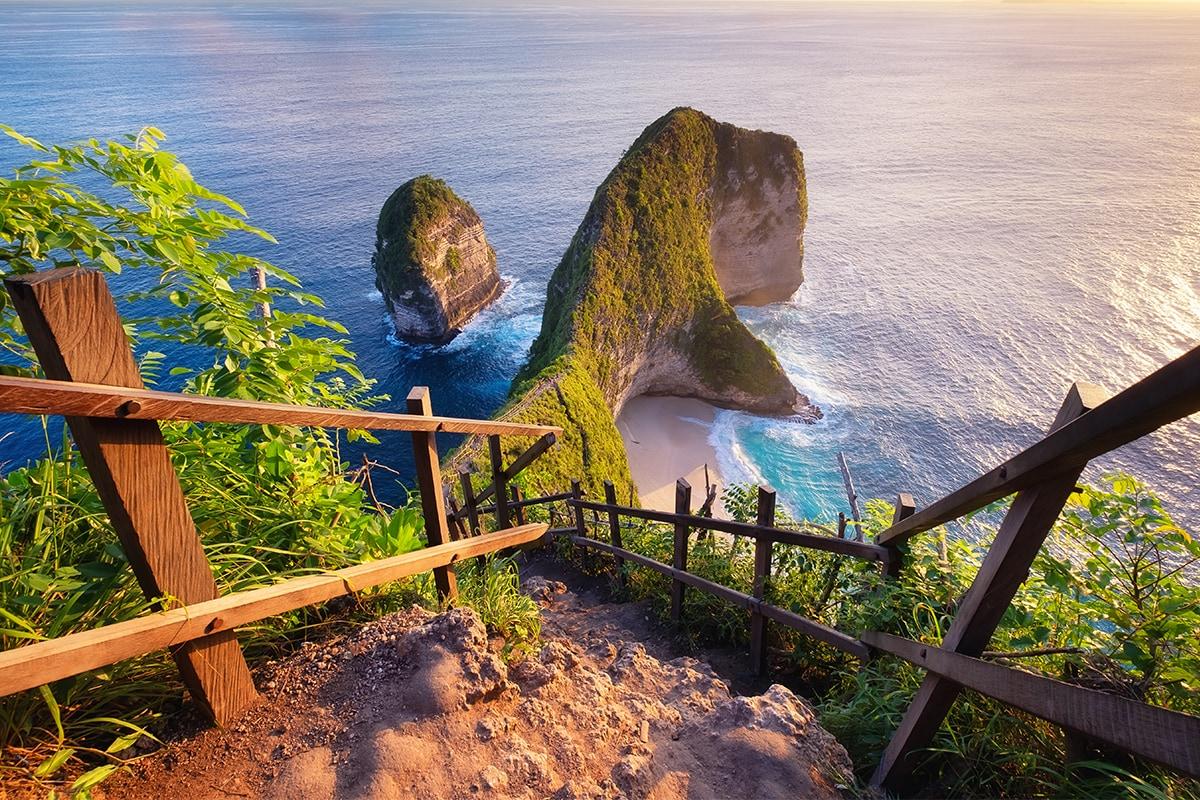
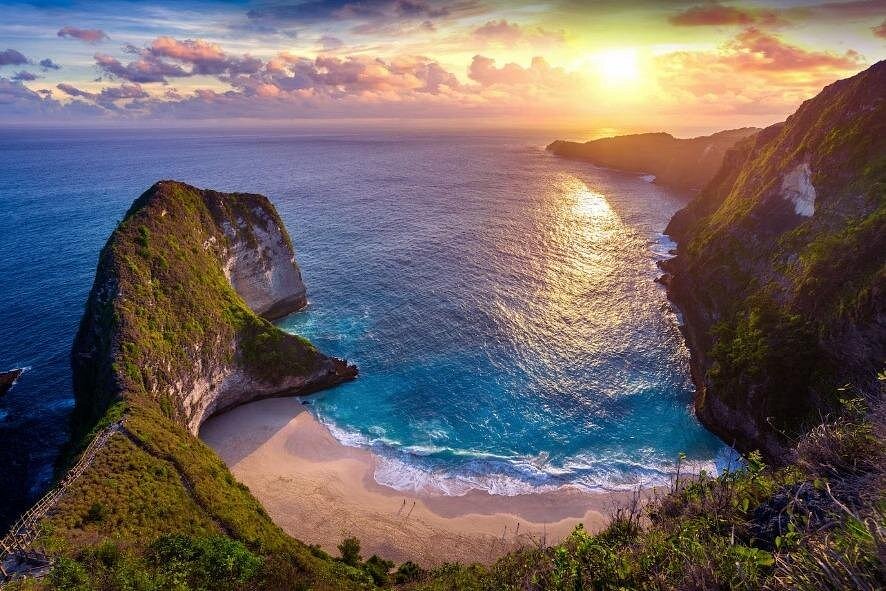
**Kelingking Beach.** The most photographed viewpoint in Indonesia and the most famous cliff in Nusa Penida. The limestone headland resembles a T-Rex from the clifftop platform, with a sliver of white sand hidden where the belly meets the cliffs. The climb down to the beach is steep and slow, with deaths since 2024 reminding visitors that wet rock is a hard no. Most people stay on the clifftop — that is enough to take in the view.
**Diamond Beach.** A pristine white-sand cove reached down roughly 800 carved steps on the south-east coast, framed by pale limestone headlands. It is the second-most photographed spot after Kelingking and the headline beach of the eastern half of the island. Sunrise or the late afternoon are the right windows; midday is hot, crowded, and the cliffs throw shadow across the sand.
**Broken Beach (Pasih Uug).** A natural limestone arch wrapping around a circular cove — the collapsed roof of a sea cave, with the Indian Ocean still rolling through the broken side. Viewpoint only; there is no beach access, but the geology is the appeal.
**Angel's Billabong.** Two minutes' walk from Broken Beach along the cliff. A natural infinity pool carved into the volcanic rock, sometimes called the 'natural pool'. Tide-dependent — calm at low tide, dangerous at high tide, with freak waves possible outside the strict high-tide window. Aim for low tide, dry season, and ask on-site staff for the day's timing.
**Crystal Bay.** A wide horseshoe-shaped bay with white sand and a gently sloping bottom, fringed by reef on both sides. The clearest water on the west coast and the easiest snorkel on the island — visibility regularly clears 20 metres and the reef is full of reef fish. Best at first light, before the wind picks up. Sun-warmed water year-round, with seasonal Mola Mola (sunfish) drifting through from August to October.
Main activities
Cliff viewpoints and beaches are the headline, but two things bring people back.
**Snorkelling and diving.** The island's second claim to fame. Manta Point, on the western coast, is one of the few reliable places in Indonesia to swim with manta rays — most likely November to April. Crystal Bay and Gamat Bay are the calmer alternatives year-round. Day-trip operators run shared boats out of Toya Pakeh harbor, and private boats can be arranged for any size of group. Most dive centres are based on the mainland, but a few operate out of the harbor on the island.
**Spiritual and cultural visits.** The third string of the island's fame, and the one most visitors overlook. The most accessible is Pura Goa Giri Putri, a Hindu cave temple built into a limestone cave in the central part of the island — the cave entrance is unassuming from the road, but the interior opens into a vast chamber with shrines, offerings, and a quiet, candle-lit atmosphere very different from the cliffs and beaches. Visitors are welcome, but modest dress is required (sarongs and sashes are provided at the entrance) and ceremonies occasionally close the inner shrine to visitors. Smaller temples and sacred sites are scattered across the island; your local driver or resort can point you toward whichever ones line your route.
How to plan around it
Most visitors spend two to three nights on the island. The clean schedule is one day on the west coast (Kelingking, Broken Beach, Billabong, Crystal Bay), one day on the east coast (Diamond, Atuh, Rumah Pohon, Raja Lima), and a third day for snorkelling or for a slower east-coast visit (Suwehan, Tembeling). Day trips from Bali are possible but rushed; the fast boat back to Sanur usually leaves by late afternoon, which compresses the day. The longer you stay, the more relaxed the trip becomes.
Where Semabu Hills fits
We sit on the south-western hills, 15–20 minutes from the west coast viewpoints and roughly 1.5 to 2 hours from the east coast. We run both loops (West Island and East Island) on fixed sunrise departures, with private drivers on call for visitors who want to skip ahead or add stops. Most guests start with a full West Island day, follow with a relaxed snorkel morning, and round it out with a sunrise start on the east. Message us on WhatsApp once your dates are confirmed and we'll plan around the weather, the tide, and how energetic you're feeling.
See also
For deeper coverage of any single stop, read our Kelingking guide, Diamond Beach, Angel's Billabong, Broken Beach, Crystal Bay, or Rumah Pohon Tree House. For a day-by-day plan around the weather, when to come is the place to start.