Snorkeling & Diving in Nusa Penida · What It's Actually Like in the Water
August 6, 2026 · Snorkeling
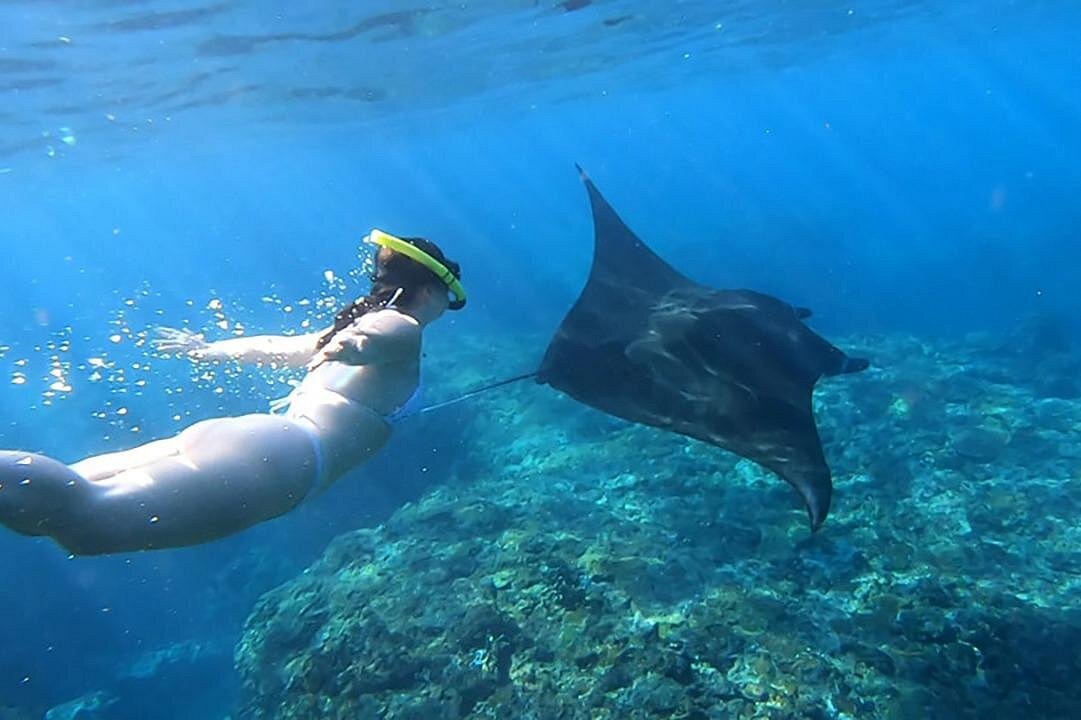
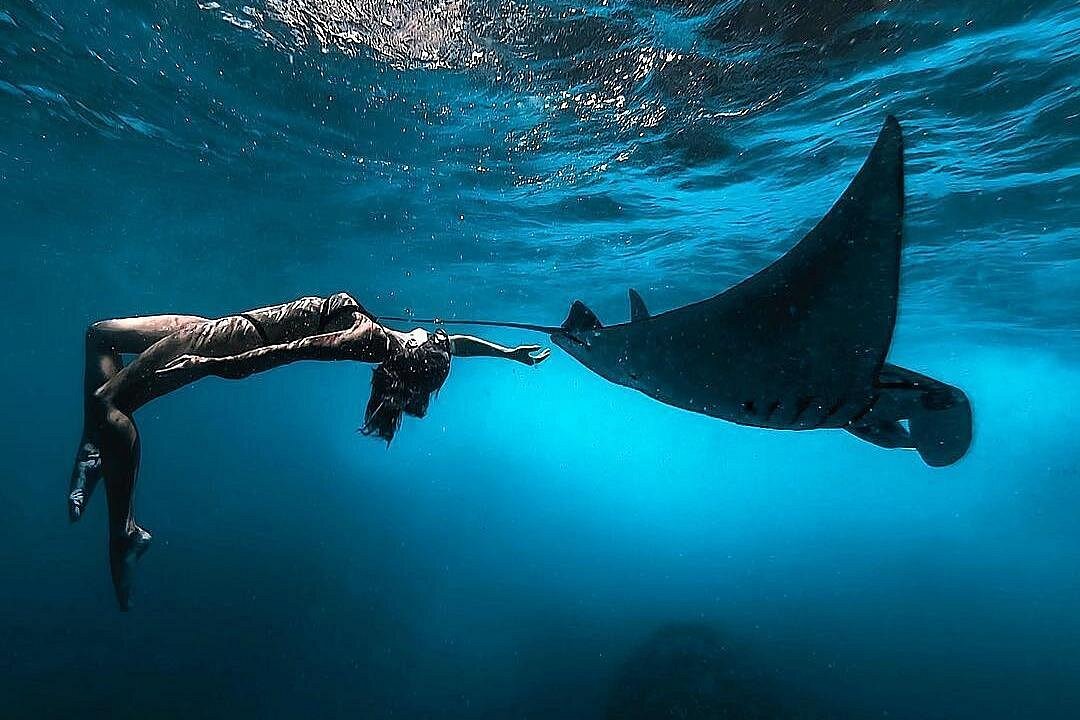
Swimming next to a manta ray at Manta Bay, dropping onto Gamat Bay's reef, and the practical differences between a snorkel and a scuba day off Nusa Penida.
Nusa Penida sits in the cool upwelling waters of the Badung Strait, and that single fact explains almost everything about what the underwater experience is like here. Visibility regularly clears 20 metres. The reef walls drop into deep blue just offshore. And in manta season — broadly November to April — the cleaning stations at Manta Bay fill with reef manta rays, sometimes only a few metres below your fins.
Below is what a day on the water actually looks and feels like — both above the surface and below it — plus how to choose between a snorkel trip and a scuba trip if you have the choice.
What a snorkel at Manta Bay feels like
The day starts at a quiet harbour, usually Toya Pakeh on the west coast, where you board either a small private speedboat or one of the shared boats. The ride out to Manta Bay is short — fifteen minutes at slow speed, longer if the swell is up — and you spend most of the crossing looking down at the colour of the water change from harbour-green to a deep, almost ultraviolet blue.
Manta Bay itself is a shallow plateau about 8 to 12 metres deep, where small reef fish congregate and the larger mantas come to be cleaned. The snorkel protocol is simple: stay calm, float at the surface, keep your fins below the plane of the reef, and don't chase. When a manta glides in underneath — sometimes a single animal, sometimes three or four in a chain — you see the white underside first, then the cephalic fins unfurled at the front of the head as it feeds on plankton. The whole interaction usually lasts a couple of minutes per pass.
The surface conditions matter more than most people expect. Calm water reads to a flat surface mirror; chop blurs the visibility and shifts your body around. Boat crews check the swell before committing — if conditions are marginal they reroute to Gamat Bay or Crystal Bay instead, where the reef sits in shallower, sheltered water.
Gamat Bay for first-timers
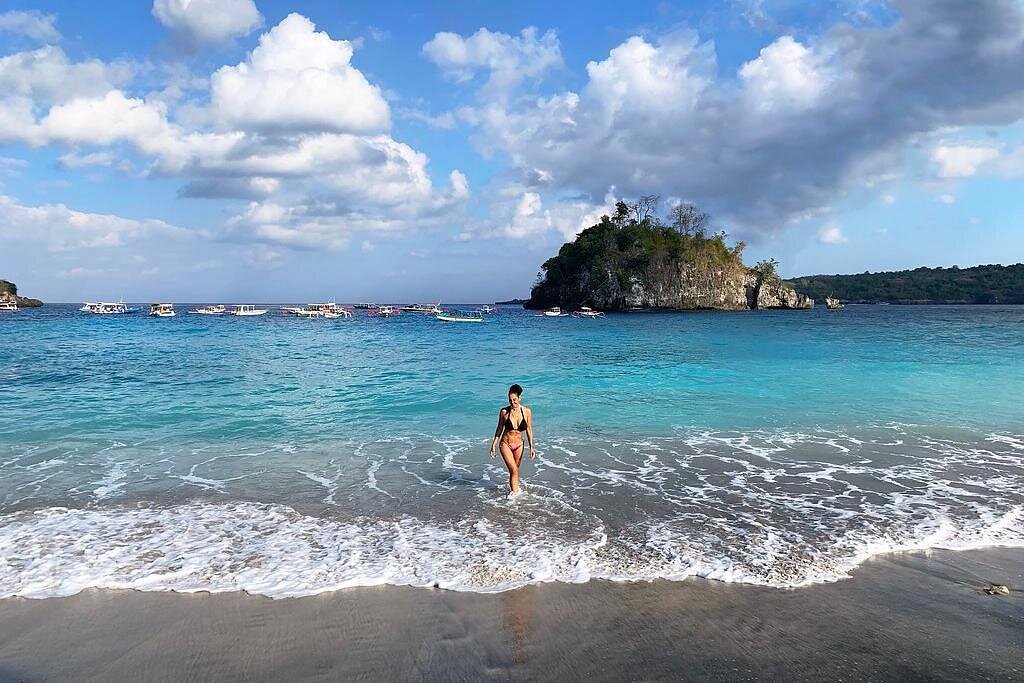
Gamat Bay, on the south-west of the island, is the friendlier introduction. It is a small, sheltered cove reached by a short trail down the headland, with shallow reef at either end and very little current. Visibility routinely clears 20 metres here, and because the bay is enclosed, the surface usually stays flat even on windy days.
Marine life is dense and visible at modest depth. Schools of damselfish, angelfish, butterflyfish and the occasional sleeping grouper. Macro divers (those who like nudibranchs, frogfish, seahorses) treat this as one of the best spots on the island — the soft-coral ledges hold a surprising amount of small life if you slow down. For snorkelers, the easy pick is the western edge, where the reef comes up close enough to see clearly from the surface and the drop-off is shallow.
The practical differences between snorkel and scuba
Snorkel and scuba look similar from the boat, but the experience is genuinely different.
Snorkel
Lower logistics, lower cost, easier to fit into a single day. You spend most of the time on the surface looking down, which means your depth is limited to roughly the same as a long breath-hold — typically 3 to 5 metres for casual swimmers. You'll see the reef structure, large pelagic fish (mantas, turtles, occasional Mola Mola in season), and the macro life visible in the shallows. You will not see the same density of small marine life that scuba divers do, simply because the depth keeps you in the upper water column.
Scuba
Higher cost (certification, dive shop, two-tank trip) and a longer commitment per dive, but the reef from below is a different world. Gamat Bay and Crystal Bay both have soft-coral gardens that divers describe as some of the best in Indonesia. SD Point, GT Point, and Toya Pakeh Wall are deeper drift dives — more current, more pelagics (jacks, trevally, barracuda), but they require Open Water certification or equivalent and are not for first-timers.
Most visitors who come to Nusa Penida without a diving certificate stick to the snorkel program. Those who do dive should book a couple of days ahead, especially in peak season (June to September), and confirm certification level before committing. Most dive centres operate out of mainland Bali and run day trips to the island; a few operate from the harbor on Nusa Penida itself.
When each activity makes sense
Two simple patterns cover most visitors.
If you are a confident swimmer with no diving certificate, do a private or sharing-basis snorkel trip from Toya Pakeh. You will hit Manta Bay (in season), Crystal Bay, and Gamat Bay, plus the boat usually takes you past the cliffs of the west coast on the way home. Half a day. Nothing to bring beyond a towel.
If you are certified and have dived before, book a two-tank boat trip through one of the dive centres. Expect an early start, lunch on the boat, and dives at SD Point or Gamat Bay. Usually around 8 to 10 hours including the surface intervals.
If you have never been in the ocean before, start with the resort pool. Most of the larger rooms have one. You can spend a morning getting comfortable with a mask and snorkel in flat, warm water before committing to a boat day — most of the discomfort people report underwater is actually about getting used to breathing through a tube, not about being in the sea.
See also
For the cliff-and-beach trail that pairs with a water day, read this overview of the island. For the half-day coastline east, see East Nusa Penida. For the practical differences between snorkel and scuba at each spot, the full reef guide and what the water actually looks like are good companions.
How we run water days from Semabu Hills
We sit 15 minutes from Toya Pakeh harbor, so a half-day snorkel fits naturally into the middle of a stay. Most guests start with a morning snorkel (Manta Bay or Crystal Bay depending on conditions), get back to the resort for lunch and a few hours by the pool, and end the day with one of the cliff viewpoints in late light. We can also arrange private boats, share-trip bookings, and full-day dive programs for certified divers — message us on WhatsApp once your dates are confirmed and we will pick the right program for your water confidence and your stay length.