Manta Point, Crystal Bay, Gamat Bay, and more — the four reefs that put Nusa Penida on the marine map, plus how to plan a half-day snorkel trip.
Nusa Penida sits in the cool upwelling waters of the Badung Strait, which is why the snorkeling here is in a class of its own. Visibility regularly clears 20 meters, the reef walls drop into deep blue, and the seasonal congregation of manta rays at Manta Point is one of the few reliable places in Indonesia to swim with these gentle giants.
If you only have a half-day, here's how to pick where to go — and what to expect once you're in the water.
Manta Point
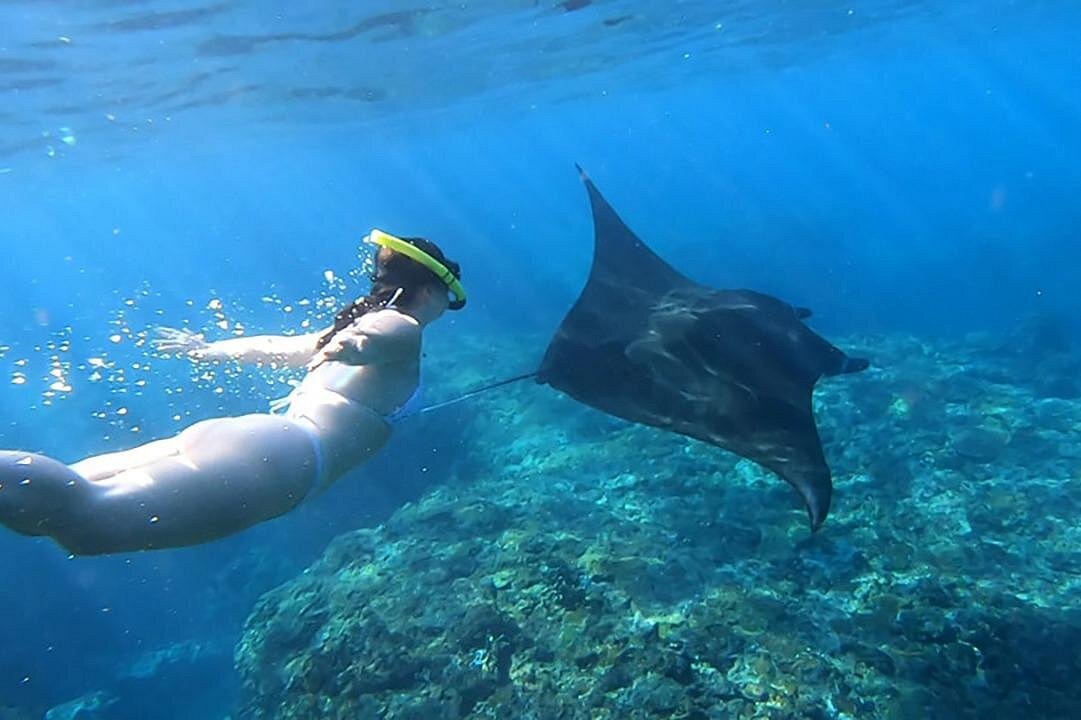
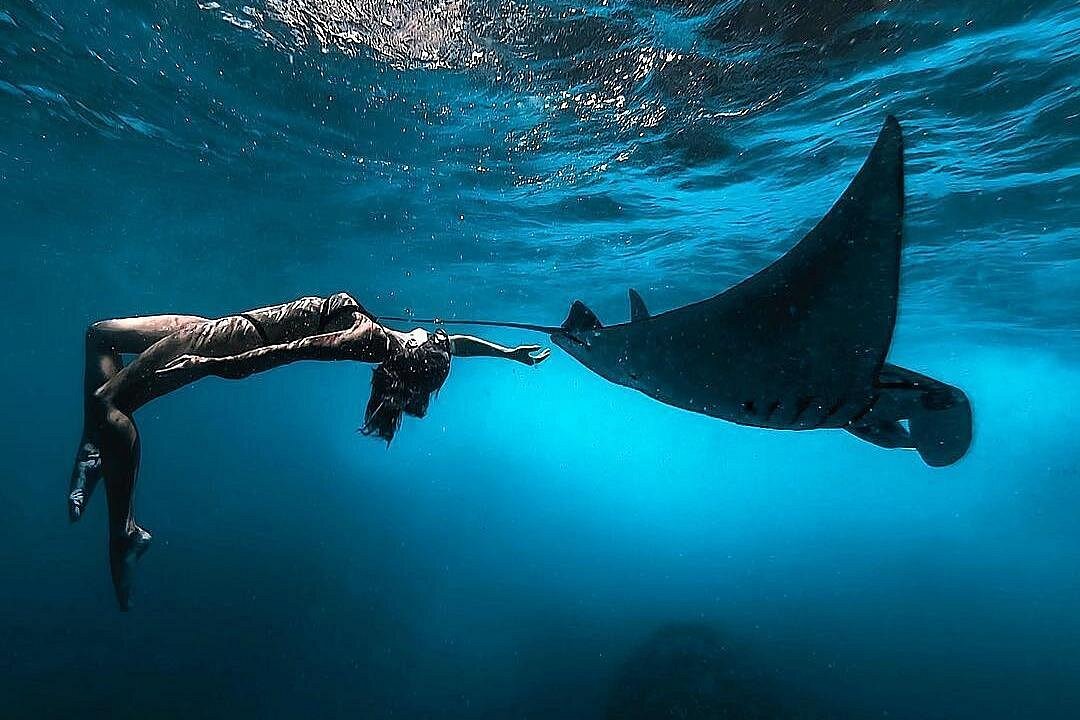
The headline reef of Nusa Penida and the most famous snorkeling spot on the west side. It is a shallow cleaning station where manta rays come to be cleaned by smaller reef fish. Sightings are most likely between November and April, when southeast winds push plankton-rich water past the headlands. You'll typically spend 30–45 minutes in the water here, holding a reef line at the surface while mantas glide underneath — sometimes just a few meters below your fins. No scuba certification is required. Reef-safe sunscreen and a long-sleeve rashguard are essential.
Crystal Bay
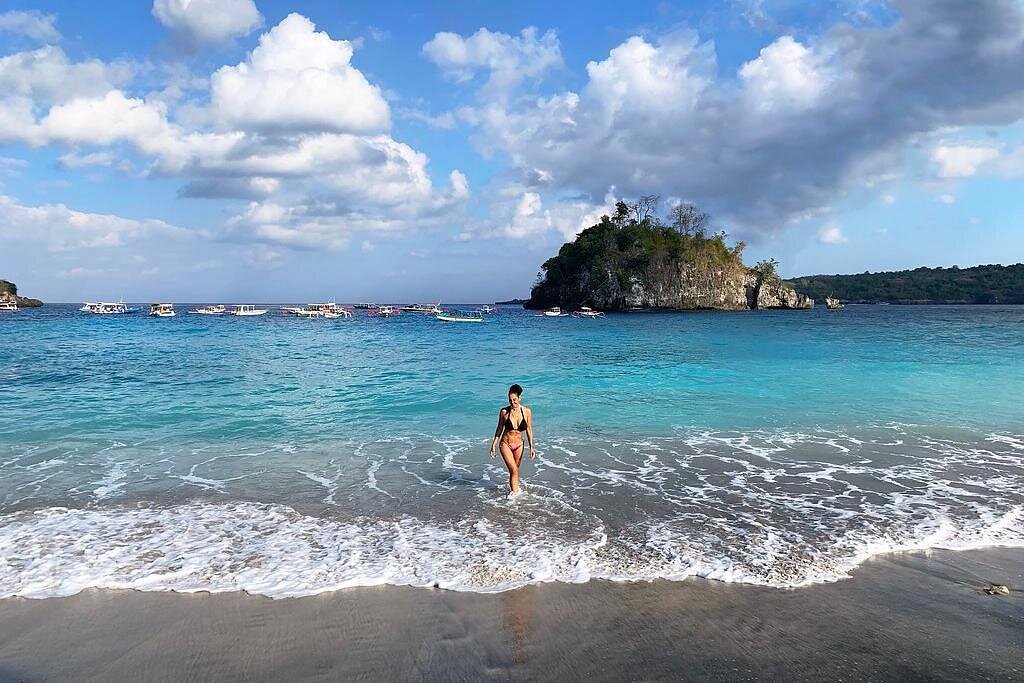
A wide, horseshoe-shaped bay on the western tip with a gently sloping white-sand bottom and a fringing reef on each side. Visibility is the most consistent of any spot on the island — often 25 meters or more — and the marine life is dense: angelfish, butterflyfish, parrotfish, occasional turtles, and the world's calmest groupers. It is the easiest entry of the four spots and is the right pick if you are not a strong swimmer or if you are bringing first-time snorkelers.
Gamat Bay
A small, sheltered cove on the south-west coast that you reach by a short trail down a headland. The reef here is shallower and very rich in soft corals and macro life — nudibranchs, frogfish if you're lucky, and dense schools of damselfish. Because the bay faces southeast, the water is calmest in the morning and choppier in the afternoon, so it works best as the first stop of the day on a private-boat itinerary.
Toya Pakeh Wall and GT Point
Two deeper reef sites usually visited together on a sharing-basis trip that runs out of Toya Pakeh harbor (a short drive north of most west-side resorts). GT Point is named for a giant trevally cleaning station — large schools of jacks and trevally circle above the reef. These spots have more current than Manta Point or Crystal Bay and are better suited to confident swimmers or first-time snorkelers who don't mind holding a reef line firmly.
How to plan your trip
The four spots fall into two common trip shapes. A private-boat trip (we run these from Semabu) usually hits two or three spots in 3–4 hours and lets you set the pace. A sharing-basis trip operates on a fixed route from Toya Pakeh and covers Crystal Bay, Gamat Bay, GT Point, and Manta Bay in roughly the same window — cheaper, but with a fixed timing of around 30–45 minutes per stop. Either way, bring a towel, reef-safe sunscreen, and water; the boat provides fins, mask, and lifejacket.
When to come
Manta season is November to April. Outside those months the reef is still beautiful, the manta encounters are simply less predictable. Water temperature sits around 27°C year-round, so a 2mm or 3mm wetsuit is enough for most swimmers.
Why we recommend staying at Semabu Hills
We are 15 minutes from Toya Pakeh harbor — short boat transfer, with breakfast on the table when you come back. Our team can sort a private boat (max 3 guests) or hook you into the morning sharing trip, including pick-up from the resort. If you're planning a stay, message us on WhatsApp and we'll book the reef day around the rest of your itinerary.
See also
For the full reef guide across four spots, read Best Snorkeling Spots in Nusa Penida. To plan around the season, see when to come. For the cliffs-and-beaches trail that pairs with a snorkel morning, this overview of the island is the place to start.